Construction & leases. Tomorrow, 17 June, 9:00 a.m., ARCOD Department main lecture hall
Short-term tourist rentals in cities
Structural dynamics and regulatory initiatives. The draft law of the Apulia Region on the regulation of the short-term rental phenomenon
Bari, 16 June 2026 – An event will be held in Bari tomorrow, 17 June, 9:00 a.m., in the main lecture hall of the Department of Architecture, Construction, Design (ARCOD) of the Polytechnic University (university campus), a study day on short-term tourist rentals in Italian cities will take place. Structural dynamics and regulatory initiatives, with a focus dedicated to the city of Bari.It constitutesthe in-depth study of the AIRMAP research.
L’iniziativa segue due precedenti appuntamenti dedicati al tema: Torino, 22 maggio per un quadro dettagliato delle principali caratteristiche del fenomeno degli affitti brevi: dalla diffusione alle performance economiche; dalla distribuzione geografica alle caratteristiche dei soggetti che gestiscono gli annunci, alla evoluzione nel periodo 2017-2024 e del 25 maggio, presso la sede della Regione Puglia, per presentare un lavoro, Uniba-Poliba, orientato sulla città di Bari.
On the outcomes of this process and of the analytical work on the phenomenon (see https://full.polito.it/airmap/), the national and local research dedicated to the topic will be extensively presented, also in order to stimulate an updated reflection on the forthcoming draft Regional Law on the regulation of the short-term rental phenomenon.
The day, 9:00 a.m., will be introduced by the rectors of Poliba, Umberto Fratino, and of Uniba, Roberto Bellotti. Two sessions will follow.
At 9:15 a.m. First session.
The structural dynamics. Chaired by Mariella Annese - Polytechnic University of Bari
Presentation: The framework of Italian cities. Loris Servillo - Polytechnic University of Turin
Talk: The case of Bari. Fabrizio D'Alessandro - Polytechnic University of Bari
Talk: Rental market and student housing. Francesco Prota - University of Bari "Aldo Moro"
11:00 a.m. Second session.
Regulatory initiatives
Chaired by Nicola Martinelli - Polytechnic University of Bari
Presentation: the regulatory framework in Italy. Filippo Celata - Sapienza University of Rome
Talk: Lessons from Barcelona. Giovanna Mangialardi - Polytechnic University of Bari
Talk: The case of Apulia. Angela Barbanente - Polytechnic University of Bari
Talk. Giovanna Iacovone - Deputy Mayor of the Municipality of Bari
Conclusions
Gianfranco Viesti - University of Bari Aldo Moro
The initiative is organized by the Polytechnic University of Bari and the University of Bari “Aldo Moro”.
Press release.
A thesis for the city. The modernity of Bari's monumental seafronts
Architecture & urban planning. The winners of the Municipality of Bari Scholarship
A thesis for the city. The modernity of Bari's monumental seafronts
Six young newly graduated architects from Poliba, between history and the present, and a project for the Marisabella port area. The proposal selected for exhibition at the 19th International Architecture Exhibition of Venice
Bari, 15 June 2026 – “The Modernity of Bari’s Monumental Seafronts” is the title of the degree thesis in architecture by six young people from Apulia at the Polytechnic University of Bari. In addition to enabling graduation, the work received positive recognition in a specific section of the Municipality of Bari call dedicated to degree theses on the city, academic year 2023-24.
The thesis, awarded together with others with a scholarship of 1,546.00 euro, was developed in the Department of Architecture, Construction and Design (ArCoD) of Poliba. The work was carried out by Alessia Biagiotti from Taranto; Alessia Camporeale and Tiziana Caravella (Molfetta - BA); Stella Conte (Giuggianello – LE); Nicola Antonio Corallo (Bari); Michele Dell’Olio (Bisceglie – BA); Supervisor, Prof. Matteo Ieva with the contribution of other researchers.
Traces of the journey. The research thesis spans 263 pages. It is an in-depth survey of the urban and architectural dynamics of the city, supported by documentary research, much of it unpublished. The vicissitudes of a medieval Bari enclosed within the walls of the seaside borough emerge at the end of the 18th century. King Joachim Murat (1767-1815) officially became its interpreter in the first decade of the 19th century. The modern history of an expansion still ongoing begins. After a broad account of the dynamics throughout the century, the study examines and focuses on the architecture of the 1920s and 1930s, set against the backdrop of the two newly created seafront promenades. Even today, a century later, the seafronts, with their complement of public buildings (period: early 1920s to early 1960s), represent the modern city of Bari in the world. In this process of transformation, the role and work of the Apulian architect Saverio Dioguardi emerge, as author and interpreter of the monumentality of modern Bari. The work ultimately looks to the future with the proposal of a new arrangement for the modern port area of Marisabella.
The contents. L’introduzione e l’inquadramento storico-urbanistico di Bari attraverso i piani di ampliamento della città, fino al 1934, consentono la conoscenza delle dinamiche del tempo e il dibattito scaturito nella prima metà del ‘900. Fondamentale per la Bari nuova fu il borgo extramoenia di Gioacchino Murat del 1813, evolutosi dalle tracce e le promesse di espansione del 1780-1790 dal regno di Ferdinando IV (1751–1825). Espansione nata dall’esigenza d’igiene sanitario, di sicurezza per gli incendi, di aereazione, di sovrappopolamento. La disposizione a scacchiera favorì un ordinato sviluppo e migliori condizioni di vivibilità e sicurezza. La pavimentazione della nuova Bari iniziò nel 1830. Furono eretti diversi edifici pubblici: Teatro Piccini, 1840; Chiesa di San Ferdinando, 1844; Cimitero 1842. Stazione ferroviaria, fulcro della modernità, 1864. Parallelamente, la città crebbe numericamente: 18 mila abitanti nel 1790; 30 mila nel 1861, con l’unità d’Italia; 50 mila nel 1871 diventando così una delle principali città del meridione. Una serie di piani urbanistici e regolatori investì il dibattito della città a cavallo del 1900, premesse di una nuova era nella storia cittadina. Bari iniziò a mostrare una nuova florida produzione architettonica. Il 1926 fu l’anno della svolta. Il Governo del tempo prefigurò un nuovo progetto per Bari, nell’ambito del potenziamento del Meridione e dell’incremento dei commerci. In questo piano strategico, l’edilizia assunse una posizione di estrema importanza nell’ottica economica. In quell’anno, venne nominato primo Podestà di Bari, Araldo Di Crollalanza (1892–1986). Sarà figura determinante. Così come indicato dalle nuove direttive profuse da Roma, slanciò le attività per rendere il capoluogo pugliese cerniera tra occidente e oriente, Porta d’Oriente. Per Di Crollalanza la politica di massiccio incremento dei lavori pubblici rappresentò la via maestra verso la modernizzazione. Nel 1930 Di Crollalanza venne nominato Ministro dei Lavori Pubblici (1930-35). La sua ascesa fu dominante nell’ambito dell’amministrazione pubblica. Per consolidare il volto della città votata al partito, si incaricò della costruzione di opere di rappresentanza, tra i quali i due lungomari di Bari,: Nazario Sauro e Vittorio Veneto, prefigurati già dal 1918, su cui si inserirono edifici pubblici di varie funzioni. I lungomari divennero vero simbolo fondativo della città nuova, autentico successo della Bari dal colore unico, colonna vertebrale e linea di osmosi con il mare, che da fonte di profitto si trasformò in simbolo.
Architecture assumed a role of primary importance in interpreting and conveying messages of political propaganda, but also of an image of national renewal. In the same period, the road section “Imperatore Augusto” seafront was added to connect the two parts of the seafront and encircle the old town. The project for the new port stood out. The ancient problem of interconnection between the old city and the modern part remained. A project, shown to Mussolini in 1926, proposed the demolition and reconstruction of Bari Vecchia. A Great Gallery dedicated to the Duce was planned. Only the Cathedral, Basilica, and Castle were to be saved. The project was never carried out.
The activism of the Minister, Di Crollanza, in those years encountered one of the most important Apulian architects: Saverio Dioguardi (1888–1961). Dioguardi, at the height of his renown in 1934, was able, more than others, to unite the imagination of the built form with the experience of “doing” proper to the construction site, interpreting and combining materials and construction techniques in their most appropriate use, such as the use of iron and reinforced concrete already from the early 1910s.
To this bold figure of an architect, the thesis dedicates an extensive description of his professional path, tracing and listing all the projects, both realized and unrealized, many of which came from what would also become his major family construction enterprise.
Dioguardi translated into works the symbols, the principles, the idea of a new “Polis” of a “Great Bari,” envisioned by Di Crollalanza, overlooking the Sea that had been the “Gulf of Venice,” culturally enriched by the newly founded Royal Adriatic University “Benito Mussolini” (1924) and commercially by the Levante Fair (1930).
Unlike the architecture of other dictatorships, uniform, repetitive, and monotonous, that of the twenty-year period stood out for its stylistic variety, the result of freedom of individual expression, without degenerating into anarchy.
Within this context of Bari in the 1930s, Dioguardi emerges as a pivotal figure. Among his works, the thesis carefully analyzes, including research at the State Archives of Bari, two works in which he was the protagonist: the Command Barracks of the Fourth Territorial Air Zone (IV Z.A.T.), now the Command of the A.M. Schools, III Air Regionbuilt between 1932 and 1935, Nazario Sauro Seafront, and the Barracks of the Voluntary Militia for National Security, designed in 1933, built between 1934 and 1939, currently known as the Barracks of the “Pinerolo” Mechanized Brigade, Vittorio Veneto Seafront.
The reading of the monumental features of Dioguardi’s two barracks is central to the entire work, due to the extent of the documentary survey. In particular, for the III Air Region, the didactic component of the survey is added, for a graphic restitution of the current state and the energy analysis. For both, the description of the analysis of the state of conservation for a possible restoration is also included. The reading of these documents and graphic drawings makes it possible to understand the various construction phases of these structures and their significance.
These buildings and others, erected with the clear intent of asserting themselves along the coastal strip in a direct relationship with the sea, perceived as a single frontage, still continue today to tell their theatricality. This condition applies above all to the Nazario Sauro seafront, not to the Vittorio Veneto seafront, whose function over the years has increasingly shifted toward an industrial character through the construction of structures and warehouses on the sea side. The loss of the sea-facing aspect of this seafront has led to the search for a new interpretation and a new approach so that the city could once again reclaim a sea view. The thesis identifies a portion of the reclaimed land, “Marisabella,” facing the “Pinerolo” Barracks. A series of historical studies, the existing conditions, and mobility considerations led to the identification of a sustainable proposal.
The use of greenery, as a filter for reclaiming urban quality and enhancing it, the Sea Museum, the headquarters for the Port Authority’s executive offices, and other infrastructures, were intended, according to the proposal, to constitute a monumental “anti-seafront.” The project envisioned by the six recent graduates, in fact, aims to create a transition respectful of the existing fabric, enhancing an area that is currently covered in asphalt because it is used as a parking lot, and seeks to create and offer the city a different way of relating to the sea.
The winning proposal was selected for exhibition at the 19th Venice International Architecture Exhibition. Here is the project video: https://youtu.be/9PMRJM0nRFs
Press release.
The Marisabella area, the central site of the design proposal.
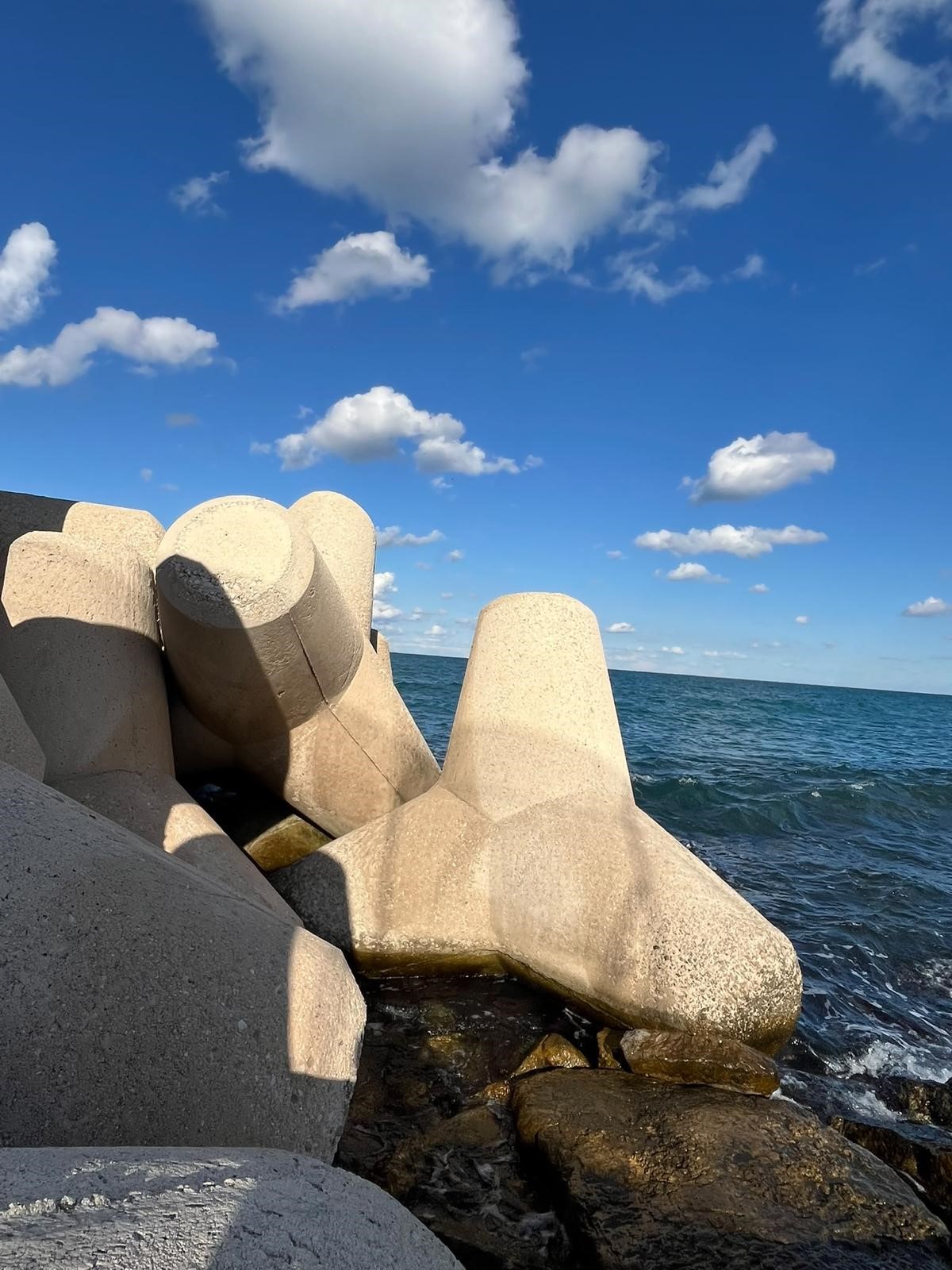
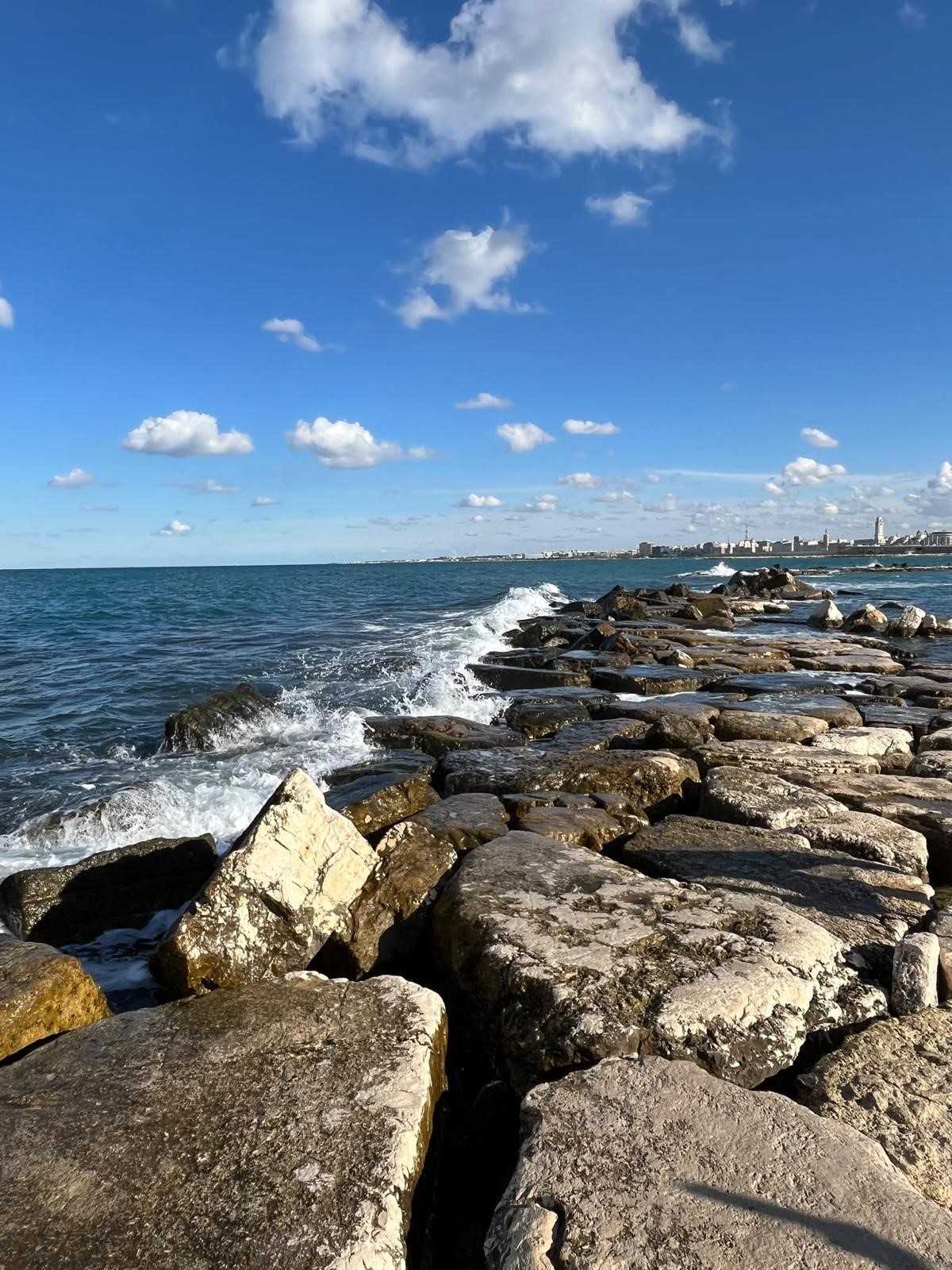
Architectural detail of the monumental heritage analyzed in the research.One of the monumental buildings subject to the historical-architectural analysis.Graphic elaboration relating to the monumental configuration of the urban frontage.Project view of the intervention envisioned for the new relationship between city and sea.Reading and transformation scheme of the port area.Aerial view of the city of Bari, 1952.The hub project in relation to the monumental waterfront.Architect Saverio Dioguardi, a central figure in the research on monumental seafronts.
Visions in Music, the Choir and Cinema
The Concerts of the Politecnico.Thursday, 11 June, the final event of the 7th edition 2026
Visions in Music, the Choir and Cinema
Investigation into the relationship between music and cinematic imagery
Bari, 8 June 2026 – “Visions in Music, the Choir and Cinema” is a project by the “Poliba Chorus” that explores the relationship between music and cinematic imagery. The project examines the role of music as an autonomous narrative element, capable of amplifying emotion, defining identity, and guiding the viewer’s perception. Through a repertoire spanning composers and contemporary authors, the project analyses the soundtrack as a true “character” in the film narrative. An artistic and production journey that enhances the synergy between sound and vision, placing the choir at the centre of contemporary audiovisual language.
The event, scheduled Thursday, 11 June, 6:30 p.m. at the Rectorate headquarters of the Polytechnic University (university campus), will feature the Poliba Chorus with its conductor, Alessandro Fortunato. Free admission, subject to reservation via the following link: https://www.eventbrite.it/e/visioni-in-musica-tickets-1984609939754?aff=oddtdtcreatoruntil all places are filled. Final deadline for registration: 11 June, 12:00 p.m.
The protagonists.Antonio Alessandro Fortunato, born in 1985, graduated in organ and piano. He obtained a master’s degree in music therapy, attending courses in pedagogy and music education at the Orff Institute in Salzburg. Passionate about the voice and choral singing, he attended courses in singing and teaching for functional vocal technique. He studied choral conducting with internationally renowned choir conductors. He is the conductor of theApulia Cantat with which he has taken part in numerous national and international competitions. He is a harpsichordist at the Fondazione Teatro Petruzzelli
The Poliba Chorus was founded in 2021 on the basis of a structured collaboration between the Polytechnic University of Bari and ARCoPu. It is a musical and educational project open to choristers, students, and music enthusiasts. The choral experience is entrusted to the guidance of Maestro Alessandro Fortunato.
“The Concerts of the Polytechnic University”, 7th edition, is an initiative of the Polytechnic University of Bari and ARCoPu (Regional Association of Apulian Choirs) with the support of the Apulia Region.
Press release.
Preventive and predictive actions for the conservation of archaeological and monumental heritage
The Future of the Archeology. Study day, Friday, 5 June, Convent of Santa Chiara
Preventive and predictive actions for the conservation of archaeological and monumental heritage
The preservation of this heritage cannot disregard the adoption of preventive and predictive approaches, capable of intercepting deterioration phenomena in their initial stages and supporting protection and intervention decisions. In this direction lies the pilot project "Predictive monitoring system for the conservation of archaeological sites and monumental buildings", funded by the Ministry of Culture - MiC
Bari, 3 June 2026 - The archaeological and monumental heritage that characterizes the Italian territory constitutes a testimony of universal value to the history and cultural identity of our country, but at the same time it represents a particularly vulnerable legacy, exposed to the combined effects of material aging, environmental and human stresses, as well as natural risks affecting the Mediterranean Area.
The preservation of this heritage cannot today disregard the adoption of preventive and predictive approaches, capable of intercepting deterioration phenomena in their initial stages and supporting, on an objective basis, protection and intervention decisions.
In this direction lies the pilot project "Predictive monitoring system for the conservation of archaeological sites and monumental buildings", promoted by the Central Institute for the Digitization of Cultural Heritage – Digital Library of the Ministry of Culture, within which the study day is included "The Future of the Archeology", scheduled for Friday, June 5, at 11:00 a.m., a Bari, old town, at the Chiostro of the Convent of Santa Chiara (at Pier L’Eremita, 25/b).
The study day, organized by the Polytechnic University of Bari (scientific coordinator, Prof. Dora Foti, ARCOD Department), stems from the awareness that the safeguarding of historic buildings requires a paradigm shift, from the traditional model of post-event intervention to data-informed management, based on the integration of in-depth knowledge of the artifact, digital technologies and Structural Health Monitoring systems for the continuous control of its behavior.
The day will be divided into four scientific sessions, with presentations aimed at exploring the most advanced digital methodologies for the preventive safeguarding of archaeological and monumental heritage. Particular attention will be devoted to survey and non-destructive diagnostic techniques, data management and querying tools, as well as structural monitoring strategies aimed at more effective protection of historic architecture.
A dedicated space will be reserved for the presentation of the results of the pilot project "Predictive monitoring system for the conservation of archaeological sites and monumental buildings",funded by the Ministry of Culture, concerning the application of a structural monitoring system to the Female Baths complex in Pompeii, a paradigmatic case study for the complexity of conservation issues. Continuing education credits are предусмотрены for engineers and architects from their respective professional associations.
Programme
11:00 | Institutional greetings
Superintendent of the Metropolitan City of Bari - Dr. F.R. Paolillo, Director of the Swabian Castle of Bari-Regional Directorate of National Museums of Apulia and Acting Superintendent BAT-FG– Arch. Anita Guarnieri
Rector of the Polytechnic University of Bari - Prof. Ing. U. Fratino
Director General of the Archaeological Park of Pompeii - Dott. G. Zuchtriegel
Director General for Digitization and Communication, MiC - Dott. A. De Pasquale
President of the Order of Engineers of Bari - Ing. C. Contesi
President of the Order of Engineers of Naples - Prof. Ing. A. Prota
President of the Order of Architects of Bari - Arch. C.D. Mastronardi
National President of A.I.D.I.A. - Arch. A. Vella
Director of the ArCoD Department - Prof. Arch. F. Defilippis
12:00 Session I
Dora Foti – Polytechnic University of Bari - “Identification of the dynamic behavior of non-structural walls in antiquity: the case of Pompeii”. Giuliano Romalli – Central Institute for the Digitization of Cultural Heritage – Digital Library - “Digital Library and the creation of Ecomic. A national ecosystem for the protection, enjoyment and enhancement of cultural heritage”. Francesca Romana Paolillo, Caterina Annese, Elena Dellù –Superintendency of the Metropolitan City of Bari -“The activities of the ABAP Superintendency for the metropolitan city of Bari: multidisciplinary and experimental methodologies for the protection and conservation monitoring of the archaeological heritage of the territory. “Anita Guarnieri, Savino Gallo, Annalinda Iacoviello - Swabian Castle of Bari-Regional Directorate of National Museums of Apulia and Superintendency BAT-FG– “Protection and enhancement: ongoing projects curated by the Swabian Castle of Bari, DRMN Puglia and the ABAP BAT-FG Superintendency“
14:30 | Session II
Luigi Oliva – Central Institute for Restoration, MiC - “Research paths of the ICR in the conservation of archaeological heritage”. Arianna Traviglia – Center for Cultural Heritage Technology – ITT Venice - “From robotics to structural monitoring: new technologies for the protection of archaeological sites”. Alessandra Zambrano – R&I Manager, Archaeological Park of Pompeii, MiC - “R&I for the conservation of archaeological sites: the Pompeii experience”
3:30 p.m. | Session III
Francesca Ceroni – University of Naples “Parthenope” - “Vulnerability to out-of-plane mechanisms of masonry elements in the Archaeological Park of Pompeii.” Lorenza Petrini – Politecnico di Milano - “Towards an integrated approach to diagnostics and structural analysis: the case of the Archaeological Park of Pompeii.” Stefano Podestà – University of Genoa - “Roofing systems for archaeological sites: the case study of the archaeological site of Villa Arianna in Castellamare di Stabia – Archaeological Park of Pompeii”
4:30 p.m. | Session IV
Gian Piero Lignola – University of Naples “Federico II” - “Innovative structural solutions in the archaeological area of Pompeii.”. Giacomo Martines – Polytechnic University of Bari -“The preventive safeguarding of Cultural Heritage from conservation theory to the potential offered by predictive technologies”. Michele Antonicelli – Planetek Italia -“Satellite monitoring for the safeguarding of historical and cultural heritage”.
Press release.
Music under the metropolitan stars
Press conference. Tomorrow, Thursday 4 June, Metropolitan City of Bari Palace
Music under the metropolitan stars
Presentation of the summer programme of the Symphony Orchestra of the Metropolitan City of Bari. More than 30 concerts are scheduled in numerous municipalities across the metropolitan area
Bari, 3 June 2026 - Tomorrow, Thursday 4 June, at 10:30 a.m., in the Giunta Hall of the Palace of the Metropolitan City of Bari (Lungomare Nazario Sauro, 29), the press conference presenting “Music under the metropolitan stars”, the summer programme of the Symphony Orchestra of the Metropolitan City of Bari, will be held.
The programme includes more than 30 concerts that will take place in numerous municipalities across the metropolitan area, as well as university spaces, hospitals and sports centres, with the aim of bringing symphonic music ever closer to students, lecturers, patients and citizens.
The programme combines culture, education and civic participation, enhancing the role of music as a tool for inclusion and sharing.
The Metropolitan Mayor Vito Leccese, the Rectors of the University of Bari “Aldo Moro” and the Polytechnic University of Bari Roberto Bellotti and Umberto Fratino, the Metropolitan City of Bari Councillor delegated to socio-cultural promotion and tourism, protection and enhancement of archaeological, documentary and library heritage and Metropolitan Orchestra Francesca Bottalico, the General Director of the Bari University Hospital “Policlinico” Antonio Sanguedolce, the President of CUS (University Sports Centre) Bari Antonio Prezioso, the Artistic Director of the Metropolitan Symphony Orchestra Vito Clemente, the Director of the Department for the Promotion and Coordination of Economic, Social and Cultural Development Raffaele Nicola Vitto and the Mayors of the municipalities in the metropolitan area will speak.
Press release.
Terna and the Polytechnic University of Bari present the Master’s programme on "Innovation in Electrical Systems for Energy"
Second-level Master’s degree. Call for applications published. Presentation of the second edition on 9 June at Poliba
Terna and the Polytechnic University of Bari present the Master’s programme on "Innovation in Electrical Systems for Energy"
At the end of the training programme, participants will obtain the Master’s degree awarded jointly by the Polytechnics of Bari, Milan and Turin. The initiative, fully funded by Terna, is part of PoliTech Lab, the Polytechnic Network of Advanced Expertise. Each Polytechnic will nominate 15 selected students, for a total of 45. Teaching activities will take place at the three universities and at the Terna Academy Campus in Rome. Application deadline: 8 September
Bari, 30 May 2026 -The call for applications for the second edition of the Second-Level Master’s programme in“Innovation in Electrical Systems for Energy”, promoted by Terna with the Polytechnics of Bari, Milan and Turin within PoliTech Lab, the Polytechnic Network of Advanced Expertise.
In this regard, the 9 June the Polytechnic University of Bari will host the presentation event of thesecond edition to illustrate to the recent graduates present, or connected via streaming, the educational offer, the details of the planned subjects, the objectives of the initiative and the organisational aspects.
The Master’s programme will train professionals called upon to develop and manage the National Transmission Grid of the coming decades, creating highly specialised profiles such as: plant and technology experts, asset management, power electrical systems, markets and regulation.At the end of the programme, participants will obtain the Master’s degree jointly awarded by the Polytechnics of Bari, Milan and Turin.
For students holding a master’s degree in Automation, Electrical, Electronic, Energy and Nuclear, Management, Computer and Mechanical Engineering, it will be possible until 8 September to submit the application for admission to the one-year Master’s programme, which will begin in November. The commitment required of the 45 selected students, 15 for each University, is 1,500 hours to obtain 60 credits. The participation costs will be fully covered by Terna, which will award each admitted candidate a scholarship. At the end of the programme, the Master’s participants will be placed within the Terna Group.
The program includes lectures, exercises, laboratory sessions, supplementary seminars, plant visits, and a final practical experience in a company. The training program is delivered in person and in Italian, with a multidisciplinary teaching staff drawn from the research and industry sectors. The teaching activities will take place not only at the three universities but also at the Terna Academy Campus in Rome.
Twenty-eight university internships at the Quirinale and at the Presidential Estate of Castelporziano
During the activities, students will deepen their scientific knowledge, alternating study and research. The internships will have a total duration of 150 hours
Bari, 28 May 2026 – It is online until 16 June 2026 (https://tirocinicrui.app) the call for applications for 28 curricular internships at the Quirinal Palace and the Presidential Estate of Castelporziano.
For the initiative, promoted by the CRUI Foundation in collaboration with the General Secretariat of the Presidency of the Republic, applications may be submitted students from the 45 Italian universities participating in the program (including the Polytechnic University of Bari), who are enrolled in bachelor's degree, master's degree, or single-cycle degree programs.
I 28 tirocini saranno così suddivisi, nei luoghi e nei tempi: i 22 tirocini curriculari al Palazzo del Quirinale si svilupperanno in due cicli: fine settembre-fine novembre 2026; novembre 2026-febbraio 2027, mentre i 6 tirocini presso la Tenuta di Castelporziano si svolgeranno in un solo periodo: settembre-novembre 2026.
Applicants must have earned at least 120 ECTS credits in the case of three-year and single-cycle degree programmes, or at least 18 ECTS credits for master's degree programmes. They must also demonstrate knowledge of the English language at least at B1 level.
The internships will have a total duration of 150 hours. During the activities, students will deepen their scientific knowledge, alternating study and research, and will also develop communication and scientific outreach skills.
The internship includes a flat-rate expense reimbursement of 600 euros.
The universities involvedBari, Bari LUM G. Degennaro, Bari Politecnico, Bergamo, Bologna, Brescia, Cagliari, Calabria, Campania Vanvitelli, Chieti Pescara, Firenze, L'Aquila, Macerata, Messina, Milano, Napoli Federico II, Napoli l'Orientale, Napoli Suor O. Benincasa, Padova, Palermo, Parma, Pavia, Pavia IUSS, Perugia, Perugia Stranieri, Piemonte Orientale, Roma Link Campus, Roma LUISS G. Carli, Roma LUMSA, Roma Sapienza, Roma Tor Vergata, Roma Tre, Salento, Salerno, Scuola Normale Superiore, Siena, Siena Stranieri, Teramo, Torino, Trieste, Tuscia, Udine, Urbino, Venezia Ca' Foscari, Verona.
Press release.
Polyphonies of the Spanish Golden Age between stage, narrative, and sonic imagination
Bari, 25 maggio 2026 – “Una sañosa porfía” è un viaggio nella polifonia vocale spagnola-coloniale del Secolo d’Oro, che dalla scoperta dell’America di Colombo si prolunga sino alla fine del 1600. Interpretata come un racconto per immagini, affine al linguaggio cinematografico, le composizioni di Gaspar Fernandes, Juan del Encina e Nicolas Gombert, si susseguono come scene di un film, in cui il suono costruisce spazi, tempi e personaggi, atmosfere tra l’Europa iberica e il Nuovo Mondo. Come nel cinema, la musica assume un ruolo narrativo centrale: guida l’ascolto, definisce identità e orienta l’immaginazione. La scrittura rinascimentale dialoga con le prime sensibilità barocche, colori ritmici e linguistici ampliano l’orizzonte espressivo. Questo e altro è il titolo di “Una sanosa porfia”, penultimo appuntamento della settima rassegna de “I Concerti del Politecnico” 2026. Evento curato dal Poliba e da ArCoPuglia, l’Associazione regionale dei Cori Pugliesi, in programma, giovedì, 28 maggio, ore 18.30, sede del rettorato Poliba, Campus universitario, interpretato da Giuseppe Petrella alla chitarra barocca; Pippo D'Ambrosio, alle percussioni; con Sergio Lella, in qualità di direttore e il contributo de “L.A. Chorus”, Associazione Matera Musica. Per partecipare all’appuntamento musicale è necessario prenotare il biglietto gratuito tramite il seguente link: https://www.eventbrite.it/e/una-sanosa-porfia-tickets-1984609867538?aff=oddtdtcreator entro il 28 maggio, ore 12,00. Biglietti disponibili sino ad esaurimento. Chi sono gli interpreti. Giuseppe Petrella si è diplomato in chitarra e fagotto, ha successivamente conseguito la laurea triennale in musica antica e liuto. Si è distinto sin da giovane per una brillante carriera concertistica che lo ha portato in tutto il mondo. Ha collaborato con le prestigiose orchestre: Orchestra da Camera di Monaco di Baviera e quella del Teatro Petruzzelli, partecipando a tournée in Russia e Brasile. Rappresentante dell’Italia in due edizioni del Festival della Chiquitania in Bolivia, ha suonato come solista in paesi. Ha tenuto masterclass in rinomati Conservatori e istituzioni musicali. Pippo D’Ambrosio, nasce a Bari nel 1965, batterista, percussionista e compositore, studia batteria negli anni ’80 con Ettore Fioravanti e Roberto Gatto a ‘Siena Jazz’ e si specializza nel ’93 al ‘Drummers Collective’ di New York. Ottiene con lode il Diploma Accademico di I e II livello in Musica Jazz al Conservatorio N. Piccinni di Bari. Collabora con artisti e gruppi di fama internazionale. Sergio Lella ha conseguito il Diploma Accademico di II livello in Musica Corale e Direzione di Coro presso il Conservatorio N. Piccinni di Bari. Si è perfezionato con maestri di rilievo internazionale. Ha diretto il Coro Giovanile Italiano nell’ambito della 3ª Accademia Europea di Direzione di Coro e partecipato a progetti internazionali. Dal 1991 dirige l’Ensemble Vocale Palazzo Incantato, con cui ha ottenuto importanti riconoscimenti e realizzato incisioni discografiche. L.A. Chorus (Lucania & Apulia Chorus), fondato nel 2014 da Matera in Musica con il supporto della Città di Matera, è una formazione corale professionale capace di mutare organico, direzione e artisti in relazione ai repertori affrontati. Ha realizzato oltre 300 concerti in Europa. Il repertorio spazia dalla musica barocca alla contemporanea, con particolare attenzione ai compositori italiani.
Marco Olivieri, Polytechnic University of Bari, among the seven winners of theses on national security
Intelligence. 7th edition of the “A Thesis for National Security” Award
Marco Olivieri, Polytechnic University of Bari, among the seven winners of theses on national security
The awarded study concerns an innovative interception architecture capable of capturing and sharing with the Authorities traffic originating from any point in the 5G network and, at the same time, enabling the traffic intercepted in the network to be decrypted. The research was carried out in the Telematics and iTNT-NS laboratories of the Department of Electrical and Information Engineering of Poliba
Bari, May 19, 2026– Seven young graduates, seven degree research projects, seven awards for a single common thread: putting university knowledge at the service of national security, with ideas, skills, and tools.
Among the seven national awardees is also Marco Olivieri. Twenty-five years old, from Matera, with a master's degree in Telecommunications Engineering from the Polytechnic University of Bari in 2025, grade 110/110 with honors (supervisor Prof. Giuseppe Piro), who with his degree thesis, a study on “an innovative architecture for lawful interception in future mobile telecommunications systems” has beenawarded, together with six other colleagues, by the selection committee of the 7th edition of the “A Thesis for National Security” Award. Initiative promoted by the Department of Information for Security(DIS), Presidency of the Council of Ministers, with the aim of bringing young people closer to the world of Intelligence and promoting the study of strategic issues for the protection of national interests. Since 2014, the Award has established itself over time as one of the main initiatives of Italian Intelligence for the promotion of security culture.
The award ceremony took place yesterday, May 18, in Rome, at Palazzo Dante, headquarters of the Italian Intelligence. The winners were awarded by the Director General of DIS Vittorio Rizzi, by the Director of AISE Giovanni Caravelli and by the Director of AISI Bruno Valensise.
“In Europe – the winner Marco Olivieri states - more than 80% of criminal networks threaten strategic assets for socio-economic development through activities such as cybercrime, illicit trafficking in drugs, firearms and explosives, environmental crimes, fraud, counterfeiting, crimes against the person, and organized property crimes. In this context, lawful interceptions represent an investigative tool of enormous strategic value for the Authorities. They make it possible to prevent, identify, and investigate serious crimes and terrorist phenomena, supporting both intelligence activities and the collection of evidence usable in judicial proceedings. The continuous evolution of telecommunications and digital infrastructures – continues - inevitably requires constant updating of interception technologies and methodologies.
The thesis work carried out in the “Wireless Network Security” course, in collaboration with the research group affiliated with the Telematics and iTNT-NS laboratories of the Department of Electrical and Information Engineering of the Polytechnic University of Bari, has helped provide new concrete and effective solutions. The designed and experimentally validated solution is structured around two distinct aspects. On the one hand, an innovative interception architecture has been defined, capable of capturing and sharing with the competent Authorities traffic originating from any point in the 5G network. On the other hand, the use of advanced cryptographic algorithms, known as key escrow, has been proposed, through which it is possible to ensure the protection of communications and, at the same time, allow authorized Authorities to decrypt intercepted traffic in the network. The proposed solution – concludes with satisfaction - garantisce un equilibrio efficace tra la tutela della privacy e le esigenze di sicurezza pubblica.
Congratulations from the Rector, Umberto Fratino, to Marco Olivieri.
For the 7th edition ofAward “A thesis for national security”there were 98 applications from 35 Italian universities. The Committee awarded 7 prizes, worth 3,000 euros each, for the best master's theses dedicated to topics of intelligence and national security interest.
I lavori premiati guardano alle sfide che oggi attraversano la sicurezza del Paese: dalla vulnerabilità dei modelli di intelligenza artificiale alla competizione per i minerali critici; dalla sicurezza energetica e ambientale alla guerra anti-satellitare; dal contrasto alla disinformazione coordinata alle nuove architetture per le intercettazioni legali nel 5G; fino alla proliferazione nucleare e alla tenuta degli equilibri strategici internazionali.
The winners of the 7th edition: Mattia Alfano, University of Milan; Matteo Gioele Collu, University of Padua; Marco Inzerillo, LUISS Guido Carli University of Rome. Luca Mazzini, University of Florence; Elisa Muratore, University of Trento; Marco Olivieri, Polytechnic University of Bari; Camilla Tuan, Alma Mater Studiorum – University of Bologna.
Press release.
DEJA-Vu, sound visions, at the Polytechnic Concerts
7th edition.Thursday, 14 May, 6:30 p.m., new Rectorate Poliba, University Campus
DEJA-Vu, sound visions, at the Polytechnic Concerts
with Rita Iacobelli, violin and voice, Nico Marziliano, piano, Roberto Inciardi, double bass, Franco Guarnieri, drums
Bari, 11 May 2026 – “Déjà-vu”, a refined musical journey through the memory of cinema, is an experience in which images resurface through sound and emotions take shape in music. The most celebrated film soundtracks come to life in an immersive narrative performed by Nico Marziliano’s trio, joined by violinist and soprano Rita Iacobelli.
From the energy of Lalo Schifrin to the timeless melodies of Nino Rota and Ennio Morricone, passing through the enchantment of Walt Disney films and the saudade of Antônio Carlos Jobim, music becomes pure evocation, capable of awakening shared scenes and sensations, leading the audience into an authentic cinematic déjà-vu.
The experiential music-cinema pairing, “Déjà-vu”, is scheduled as the fifth stop of the seventh edition of “The Polytechnic Concerts”, on Thursday, May 14, 6:30 PM, presso il nuovo Rettorato del Poliba (campus universitario).
The artists.Rita Iacobelliis a violinist and opera singer. She graduated in Violin from the “N. Piccinni” Conservatory in Bari and in Singing from the “N. Rota” Conservatory in Monopoli, and obtained a Second-Level Degree in Chamber Vocal Music. She has performed with prestigious orchestras such as the Italian Youth Orchestra with R. Muti, the Giuseppe Verdi Symphony Orchestra of Milan, the Teatro Lirico of Cagliari, and the Collegio Ghislieri of Pavia. She has collaborated with major conductors and soloists on international tours in Europe, the USA, Japan, and Russia.
Nico Marziliano Trio with Nico Marziliano on piano, Roberto Inciardi on double bass, and Franco Guarnieri on drums has been active for many years. The trio brings together musicians with prestigious collaborations. The repertoire consists of refined reinterpretations of great standards, from modern jazz classics to original compositions by Nico Marziliano, with unpublished transcriptions not included in the Real Books.
Press release.
Ivalua, the Polytechnic University of Bari and PwC Italy bring technology to procurement
Management Engineering.Three-year agreement between Poliba and Ivalua SAS. The contribution of PwC Italy
Ivalua, the Polytechnic University of Bari and PwC Italy bring technology to procurement
A pioneering initiative for students of the “Supply Chain Management” course: they will combine theory with practical experience using the Ivalua platform to gain insight into the dynamics of business contexts
Bari, 5 May 2026 - Ivalua, the global leader in AI-based Spend Management and Procurement solutions, and PwC Italy announced today, 5 May, a new initiative that will see students at the Polytechnic University of Bari develop advanced digital skills through the use of a market-leading technology. More than 180 students enrolled in the Supply Chain Management course, part of the Master’s Degree in Management Engineering at the Polytechnic University of Bari, will combine theory with practical experience through the use of the Ivalua platform, coming into contact with tools and dynamics typical of business contexts.
The collaboration was formalized through a renewable three-year agreement between the Polytechnic University of Bari and Ivalua SAS (France).
The initiative, developed with the contribution of PwC Italy, represents – as highlighted during the presentation – the first experience in Italy to offer students access to a digital procurement platform, enabling them to effectively integrate academic training with practical applications of the concepts learned during the course.
“It is essential to reduce the gap between universities and businesses, offering students innovative training paths that integrate theoretical skills with cutting-edge digital tools. Bringing real cases and tools used by companies into the classroom makes it possible to adopt a learning by experience approach, making learning more concrete and closer to operational dynamics. Collaborations like this represent a concrete step toward training that is increasingly oriented toward the real challenges of the production world”, said Professor Ilaria Giannoccaro, lecturer of the Supply Chain Management course at the Polytechnic University of Bari and Director of the Department of Mechanics, Mathematics and Management.
The initiative will begin in May and will last four weeks, combining lectures, case studies and guided use of the Ivalua platform to simulate real-world business procurement and supply chain scenarios.
“At PwC Italy, we believe in the value of initiatives that create a concrete bridge between universities and businesses. This collaboration with Ivalua and the Polytechnic University of Bari allows students to combine theory with practical experience on real procurement and supply chain scenarios, developing digital skills that are increasingly in demand in the market and strengthening the link between academic training, technological innovation and the world of work”, said Gianfranco Netti (IT), Director, Procurement Transformation, PwC Italy.
“We are proud to collaborate with the prestigious Polytechnic University of Bari and PwC Italy to support the next generation of supply chain and procurement professionals”, ha dichiarato Gregory Gazzoni, Alliances and Partner Director di Ivalua. “By offering students practical access to the Ivalua platform, we want to help them develop concrete skills that will accelerate their careers and strengthen their digital capabilities.”
Ivalua (it.ivalua.com) is the only unified enterprise platform for spend and supplier management. Ivalua seamlessly connects people, AI agents, workflows and data, helping companies become more profitable, resilient and sustainable. More than 500 of the world’s most prestigious brands rely on Ivalua, which is consistently recognized as a sector leader by Gartner and other leading analysts.
Founded in 1990, the Polytechnic University of Bari It is a state university and one of the three Italian polytechnics specializing in the scientific and technological fields. It offers bachelor's degree programs and master's degree programs and single-cycle degree programsand doctoral programs in architecture, engineering and industrial design.
First prize for Poliba students from the RoboPhysics Laboratory in Japan
IEEE RoboSoft 2026.International robotic Grasping competition in Kanazawa
First prize for Poliba students from the RoboPhysics Laboratory in Japan
The fruitful robotic raspberry harvest makes the winning difference
Bari, 30 April 2026 - The Poliba team from the “RoboPhysics Laboratory” won first prize in Japan at the “RoboSoft Grasping Competition 2026”. The competition took place from 8 to 9 April 2026 in Kanazawa, the cultural capital on the western coast of Japan, during the IEEE International Conference on Soft Robotics (IEEE RoboSoft 2026). The competition saw the participation of several international teams dedicated to robotics. Among them, in addition to Poliba, were the strong teams from JAIST (Japan Advanced Institute of Science and Technology), Southern University of Science and Technology (Shenzhen, China), and Tecnológico de Monterrey University (Mexico).
The project. The challenge required the ad hoc design of a robotic gripper (specialized gripper), capable of collecting artificial raspberries with the softness and fragility characteristics of real raspberries, through the control and dosing of the right force needed to detach the fruit from the plant and place it neatly in a basket without damaging it. The winning students. Frutto del programma d’anno del percorso di studio del corso di “Mechatronics”, proseguito come attività di tesi (docente della materia, prof. Vito Cacucciolo), tre studenti Poliba del corso di laurea magistrale in “Mechanical Engineering”. Ciò ha consentito la composizione del team Poliba così formato: Elisabetta Annese e Luca Mitaritonna di Molfetta (Ba), Giuseppe Macchia di Palo del Colle (Ba), studenti; ing. Angelo Catalano, coordinatore-tutor, dottorando presso il RoboPhysics Laboratory, prof. Vito Cacucciolo, supervisore, responsabile scientifico del Laboratorio Poliba di robotica.
The competition. The RoboPhysics Laboratory team presented a soft end-effector that used a mechanism that autonomously adapted force and shape to the grasped object thanks to its particular structure and the use of flexible materials. This gripper made it possible to combine a firm grasp with the delicacy required to handle fragile objects such as raspberries without damaging them. In addition, the team optimized the gripper’s geometry and materials to maximize harvesting performance. The winning idea proved to be an innovative hybrid positioning system that, by automatically recognizing raspberries through their red color, allowed one of the team’s students, via a video game joypad, to make fine adjustments to ensure the complex grasping position required to pick the raspberry. The test. Each team had 10 minutes to collect as many ripe raspberries as possible. The score was reduced if the raspberries or artificial plants were damaged during harvesting, or if picking a single raspberry required more than one attempt, or if an unripe raspberry (green in color) was mistakenly harvested. The result. The Politecnico di Bari team achieved the highest score in the competition, 238 out of 264 points available. Great satisfaction was expressed by the entire participating group for the result achieved. Congratulations from the Rector, Umberto Fratino, were also forthcoming. The Poliba group was sponsored by Omnigrasp, a spin-off company of the Polytechnic, which provided the robotic arm. Technical support: engineers Antonio Camposeo and Fabio Gargano. Poliba co-tutors: Prof. Mariagrazia Dotoli, Prof. Raffaele Carli.
The restoration and care of the tree
Bari, 21 April 2026 – The tree, like memory, is meant to grow. The concentric rings in the trunk, like the stratifications of the built environment, memory, lead to an identity. Knowing how to read these traces in order to protect and preserve memory, and the identity that derives from it, is the task of restoration.
On these principles dear to Mauro Civita (1933-2003), architect and professor, a substantial recently published book is based: “The restoration and care of the tree. Mauro Civita between life and works” by two of his students: Rossella de Cadilhac and Lucia Serafini, professors of architectural restoration at the Polytechnic University of Bari and the University “G. d’Annunzio” of Chieti. Published by Schena Editore in 2025 (568 pages, 42.50 Euro), the book is dedicated to the life and works of Mauro Civita, an important witness to the history of restoration in Italy and worldwide. Together with his teacher, Roberto Pane, Civita shared a concept of research based on respect for stratified material as an essential element in safeguarding cultural heritage, as well as attention to the protection and rehabilitation of historic centers, such as the recovery plans for Molfetta and Bitonto, for cultural continuity between the old and the new.
Civita assigned to the expertise of specialists, and therefore to the school of which he himself was a leading figure, the primary responsibility for caring for the tree, memory, certain that by caring for the tree we would care for ourselves and for the memory of which we can be custodians only if we are aware of it.
At the Faculty of Architecture in Pescara since 1973. Full Professor of Monument Restoration in 1990, he moved in the 1995-1996 academic year to the Faculty of Architecture of the Politecnico di Bari, where he remained until his death in 2003.
The interest in stratification, at any latitude, was one of the strengths of Civita’s thought and work. With this approach, he managed outstanding projects such as the cathedrals of Ruvo di Puglia, Conversano, Acquaviva delle Fonti, the theatres of Barletta and Lucera, and the restoration experiences of historic centres such as Bari, Molfetta, Bitonto in Puglia, and Termoli in Molise. Civita was above all a technician who viewed design as a formidable tool for intervening in the existing fabric and improving its performance, both functionally and structurally.
The presentation of the volume “The restoration and care of the tree. Mauro Civita between life and works” edited by Rossella de Cadilhac and Lucia Serafini, will take place tomorrow, Wednesday,22 April, 9:00 a.m., at the Politecnico di Bari, in the Video Conference Room (via Amndola,126/b).
Through academic contributions and testimonies, the presentation will make it possible to explore in depth the relationship between knowledge, design and construction site in restoration, highlighting the value of scientific research and practical experience, and providing a complex and current overview of restoration as a critical and responsible practice.
Programme
9:00 a.m. – Opening remarks, Rossella de Cadilhac and Lucia Serafini
Moderator: Giuseppe Berardi – Mauro Civita Association
9:10 a.m. – Institutional greetings
Umberto Fratino – Rector of the Politecnico di Bari
Francesco Defilippis – Director of the ArCoD Department
9:30 a.m. – Institutional addresses
Maria Piccarreta – Directorate-General for Contemporary Creativity, MiC
Francesca Romana Paolillo – ABAP Superintendent for Bari
Cosimo Damiano Mastronardi – President of the Order of Architects P P C B a r i
9:30 a.m. – Presentation of the volume
Claudio Varagnoli – University of Rome “La Sapienza”
And yet, in that impossible place. The School of Restoration of Pescara
Adriano Ghisetti Giavarina – University "G. d'Annunzio" of Chieti-Pescara
Mauro Civita’s scientific activity between research and project
Ignazio Carabellese – Polytechnic University of Bari
The construction site that serves restoration, between knowledge and project
Andrea Pane – University of Naples “Federico II”
Historic centers of Apulia and beyond, between theoretical issues and operational urgencies
11:30 a.m. – Testimonials and contributions
Schena Publisher
Publishing and restoration: transmission and construction of knowledge
Cingoli Nicola & Son s.r.l.
The restoration site: technique, material, and responsibility
Giuliano Volpe – University of Bari “Aldo Moro”
Archaeology and restoration: knowledge and the project of conservation
Francesco Ghiro – Mauro Civita Association
The cultural legacy of Mauro Civita.
Cinema with Eyes Closed, images born from sound
Bari, 20 April 2026 - Listening to a soundtrack often means rewatching a film with the imagination. In the musical proposal for solo piano, the young pianist Daniele Rosati invites the public next Thursday,23 April, 6:30 p.m. at the venue of Rectorate (university campus), to experience an immersive listening journey, in which music generates inner images and becomes the protagonist of the narrative. He will do so during the third event of the 2026 season of the seventh edition of “I Concerti del Politecnico”, a Poliba-ARCoPu initiative, the Regional Association of Apulian Choirs.
Rosati will seek to transform the most familiar themes in film history into soundscapes capable of evoking emotions, places and stories. Music becomes the invisible character of cinematic language, a bridge between art, technology and perception.
Reservations are open until 12:00 noon on Thursday, 23 April and subject to seat availability.
The Pianist.
Daniele Rosati, born in Fasano, is a young pianist of marked musical sensitivity. He began studying the piano under the guidance of Cosimo Gigliola, graduated with top honors and distinction. He is currently pursuing the two-year Piano program at the “Nino Rota” Conservatory in Monopoli with Roberto Bollea, alongside the three-year program in Wind Orchestra Instrumentation. Winner of numerous national competitions, including the Absolute First Prize at Muse in Musica, he carries out an intense concert activity as both soloist and chamber musician. He combines technical rigor and communicative ability, showing a particular interest in contemporary repertoire.
The Illusion of Nuclear Power and the Renewable Energy Revolution
Bari, 20 April 2026 - Is it possible to imagine a world powered 100% by renewable energy? Gianni Silvestrini and Giuseppe Onufrio answer this question with data and real cases that dismantle, one by one, the myths of a return to nuclear power. They do so in their essay: “The Illusion of Nuclear Power and the Revolution of Renewables”, Edizioni Ambiente, 240 pages, 22 euros.
From endless construction sites with extremely high costs to the risks of accidents; from waste management to decommissioning, nuclear power appears to be a rigid, expensive technology poorly suited to combating the climate crisis. The authors show why nuclear power cannot compete with renewables in terms of cost, speed, scalability, and flexibility. At the same time, the book tells the story of the revolution already underway, showing how solar and wind have become the most cost-effective options. Mobility, construction, and industry are the decisive areas in which to drive the transition with concrete solutions and scenarios that point to a feasible route toward a sustainable, equitable, and credible energy system.
Two opposing stories that intertwine: that of a technology in difficulty and that of an accelerating transformation will be told by the authors, tomorrow, Tuesday, 21 April, 11:30 a.m., at the Polytechnic at the university library, “PoliLibrary” (university campus) on the occasion of the first meeting of “The Sustainability Coffee”, a series of events and debates curated by the Puglia Productive District for Renewable Energy and Energy Efficiency “La Nuova Energia” and by the Polytechnic University of Bari. The initiative aims to provide businesses, institutions, and civil society with a space for discussion and shared reflection on the key issues of responsible and sustainable development of the global economy and its relaunch.
At the first event of “The Sustainability Coffee”, the authors will speak with Prof. Riccardo Amirante, Full Professor of Energy Systems at the Polytechnic, Prof. Umberto Berardi, Full Professor of Technical Physics at the Polytechnic, and the President of the District, Beppe Bratta.
Free admission.
Who are the guests and authors.
Gianni Silvestrini has conducted research activities at the CNR and the Polytechnic University of Milan.
He served as Director General of the Ministry of the Environment and as advisor to the Ministry of
Economic Development. He is currently Scientific Director of Kyoto Club and of the magazine and
portal QualEnergia. He is President of Exalto Energy & Innovation and chairs the Scientific Committee of Key – The Energy Transition Expo. He has published several works with Edizioni Ambiente.
Giuseppe Onufrio conducted research in the energy and environmental fields, collaborating with scientific institutions and associations between 1985 and 1997. Active in environmental movements since the 1970s, he has combined research work with a constant and direct commitment to environmental protection. He served on the board of directors of the National Agency for Environmental Protection, now ISPRA. He was scientific director of the Italian Sustainable Development Institute, now the Foundation for Sustainable Development. At Greenpeace Italy, he served as campaigns director from 2006. He is part of the European network Nuclear Transparency Watch.
Master KEI, research enhancement, technology transfer, intellectual property management: this is how we prepare innovation specialists
Bari, 7 April 2026 - Production and transfer of knowledge, strategic management of intellectual property, represent fundamental levers for innovation, business competitiveness, and the development of research.
These processes require integrated interdisciplinary skills: from technical-scientific to legal-economic-managerial ones, combined with the ability to adapt to continuously changing contexts, as required by the present time.
Master KEI 2025-26, “Intellectual Property Valorisation for Knowledge Exchange & Impact” is the first multi-campus master’s program in Italy, aimed at training the future innovation managers.
The Master’s program, at the second level, now in its 5th edition, is promoted by Netval (Association bringing together 66 universities, 13 public research bodies, 18 Scientific Hospitalization and Care Institutes, and 13 other institutions), Politecnico di Torino, the Ministry of Enterprises and Made in Italy, and this year also by Politecnico di Bari.
Under the patronage of CoDAU (Permanent Conference of University General Directors), it benefits from the participation and scientific-teaching contributions of the Universities of: Bologna, Cagliari, Florence, Trento, Bergamo, Turin, the Gran Sasso Science Institute, the IUSS University School of Pavia, and the promoters, the Polytechnic Universities of Turin and Bari as host venues of the itinerant program.
The Master’s program, 60 CFU, in Italian, is designed for those who intend to acquire advanced training in innovation processes, research valorization, and technology transfer, with particular attention to the protection and management of intellectual property.
The aim is to train professionals capable of understanding and interpreting the national innovation ecosystem, managing complex technology transfer processes, generating value from scientific and technological knowledge, and operating effectively in contexts of interaction between universities, research centers, and the productive sector.
The Master’s program, limited to a maximum of 25 master’s degree graduates and/or PhD holders (15 candidates have been admitted to the current 5th edition), provides advanced skills through a multidisciplinary, professionally oriented program.
The Master’s program will last one year for a total of 1050 hours (300 hours of classroom and laboratory teaching activities; 750 hours of final project work and/or internship). Start of teaching activities: April 2026. Completion: October 2027.
Il Poliba ospiterà l’evento di apertura del Master KEI e sarà sede didattica dei tre moduli formativi previsti sui temi: “Valorizzazione della Ricerca e Terza Missione”; “Gestione dell'innovazione”; “Modelli di trasferimento tecnologico”. Coordinatore scientifico: prof. Antonio Messeni Petruzzelli.
The inaugural event and the first lesson of the Master’s program are scheduled Thursday, 9 April, 11:30 a.m.at the BINP - Boosting Innovation in Poliba (Oplà Space – university campus).
Il programma prevede: Saluti istituzionali, prof. Umberto Fratino, Rettore del Politecnico di Bari; dott.ssa Paola Brunetti, Dirigente Ministero delle Imprese e del Made in Italy; prof.ssa Eleonora Di Maria, Netval; prof.ssa Elisa Ughetto, responsabile scientifica Master KEI Politecnico di Torino; prof. Antonio Messeni Petruzzelli, referente scientifico master KEI Politecnico di Bari.
This will be followed (1:00 p.m.) by the first lecture dedicated to Research Valorisation and the Third Mission.
The Invisible Spectator, the Act of Seeing in Cinema
Bari, 3 April 2026 – “The Invisible Spectator”, scheduled for next Thursday, 9 April, 6:30 p.m. at the Polytechnic University of Bari for the 7th edition of “The Concerts of the Polytechnic”, is a performance that explores the act of seeing in cinema.
The artistic proposal intertwines spoken texts, live music, and projections. The audience is guided on a journey that begins in the darkness of the theater and passes through the collective fascination that cinema can evoke.
This is therefore not a linear history of cinema, but a mosaic of visions, suggestions, and atmospheres. A journey that begins with Plato’s myth of the cave and goes on to encounter the thought of great authors (Wenders, Lynch, Kieslowski, Kubrick, Tarkovsky, etc.). The performance is conceived as an immersive experience, suspended between concert and theatrical performance: lights, projections, and words create a hybrid language that restores to the audience the collective and intimate sense of cinema. At a time when we are continuously bombarded by images, “The Invisible Spectator” asks what it truly means to “look and see” reality through the illusion of cinema.
The performance, scheduled at the new rectorate headquarters of Poliba (university campus), is an integral part of the 7th edition of “I Concerti del Politecnico,” an initiative of the Polytechnic University of Bari and the Regional Association of Apulian Choirs (ARCoPu).
A look at the guests. On the music scene for over 20 years, Serena Fortebraccio, moves within the world of Jazz and, in parallel, follows cultural paths from which she draws to formulate her own musical proposal. Trained in jazz in Bari, between the school “Il Pentagramma” and the Conservatory “Niccolò Piccinni”, she teaches Jazz Singing at the Conservatory “Nino Rota” in Monopoli. Her jazz collaborations include those with Roberto Ottaviano, Mirko Signorile, Fabio Accardi, Paolo Damiani, Pino Minafra, and Vito Di Modugno.
Vincenzo Piglionica is a film director, born in 1973, who studies stories, myths, and archetypes and learns rhythm by editing images as if they were musical scores. The result is a lucid narrative gaze. Over the years he has moved between music videos, short films, and independent productions, until founding in 2001 “Vertigo Imaging: a company and creative workshop that blends cinema, advertising, and television. He collaborates with EMI, Universal, Sony, Fandango, and with artists such as Caparezza, Roy Paci and Neri per Caso. He has signed documentaries selected for the Venice Biennale and short films that were finalists for the Nastri d’Argento.
Domenico Cartago, pianist and composer from Trani, uses sound as the language of the depths of the soul. Trained in jazz under the guidance of Davide Santorsola, he graduated with honors from the Conservatory “Niccolò Piccinni” in Bari. His music blends jazz, electronic music, and experimentation. Active in theater and teaching, he collaborates with artists from diverse backgrounds.
UniStem Day 2026, the journey of scientific research turns 18
Bari, 19 March 2026 - “Free to choose” is the title of the 18th edition of UniStem Day 2026, the largest international scientific outreach event dedicated to female and male students. The event is scheduled tomorrow, 20 Marchsimultaneously at 93 universities and research centers in 12 countries on the occasion of the initiative “Universities Revealed,” promoted by the Conference of Rectors (CRUI).
In Bari, the initiative is coordinated by the University of Bari Aldo Moro, the Polytechnic University of Bari, the Libera Università Mediterranea (LUM), and the CNR – Institute of Biomembranes, Bioenergetics and Molecular Biotechnologies.
The event will take place in the “Attilio Alto” Main Hall of Poliba at 9:00 a.m..
Nel corso della giornata, i partecipanti potranno assistere a interventi di alto profilo scientifico: la Prof.ssa Maria Grano dell’Università di Bari illustrerà il dialogo tra osso, muscolo e cervello; il Prof. Vitantonio Bevilacqua del Politecnico di Bari presenterà le applicazioni della bioingegneria nell’approccio One Health; il Prof. Mario Acunzo della Libera Università del Mediterraneo, approfondirà il ruolo dei microRNA nella biologia moderna. A concludere l’evento sarà la Prof.ssa Michela Matteoli, neuroscienziata, prorettrice dell’Università Humanitas di Milano e accademica dei Lincei, con un intervento dedicato al funzionamento e alle potenzialità del cervello.
“The greatest value of this day – it is stated in a note - is to offer female and male students the opportunity to approach the world of research in a concrete way, discover its fascination, and understand its impact on everyday life. Meetings like this can spark curiosity, stimulate new vocations, and help young people imagine their future in science, freely and consciously»
UNISTEM DAY 2026 in the world. In addition to Italy, the following countries are taking part in UniStem Day 2026: Australia, Denmark, France, Germany, Norway, the Netherlands, Poland, the United Kingdom, Spain, Sweden, Hungary.
Marino Lopopolo, architect and courageous pioneer
Bari, 24 March 2026 – In the classic postcard image of the city of Bari, the exterior shots of the old seafaring district stand out, clinging to San Nicola and protected by the Swabian Castle, alongside the checkerboard layout of the nineteenth-century Murat district seen from above, followed by the reflections in the water in front of the orderly street lamps of the Lungomare Nazario Sauro, which anticipate the backdrop of public buildings and palaces from the 1930s.
This last part of the story represents a significant urban and cultural evolution of the city of Bari. Modernism and, even more so, Marinetti’s Futurism, currents of thought that stimulated Fascism, led the city to interpret a new role: modern, dynamic, enterprising, politically oriented toward the opposite shore of the Adriatic. Architecture becomes a tool for a new reading of symbols and meanings.
The contribution and experience of Marino Lopopolo are part of the construction of the modern image of the city of Bari. as an emblematic case for understanding the dynamics of modernization of Bari’s urban fabric within the framework of Fascist “Greater Bari.” Marino Lopopolo (Bisceglie, 1905 – Bari, 1980), who graduated in architecture in 1932 from the Royal University of Naples, followed, shared, and expressed many features of Futurist thought through his works. A supporter of the establishment of the register of architects of Apulia (1952), he remained proactive even in the postwar period until the mid-1970s. His archive has been donated to the Order of Architects of the Province of Bari.
Today, a substantial book, “Antonio Lopopolo, Architect and Courageous Pioneer” by Antonio Labalestra, Quasar editions (368 pages, €22.00), through careful work on archival sources, reconstructs the human and professional profile of the Bari architect, restoring its complexity and significance within the broader context of twentieth-century Italian architectural culture.
The volume highlights Lopopolo’s contribution to defining a new idea of architecture and the city, tracing his activity across public buildings, working-class districts, ministerial buildings, planned towns, and commercial spaces among the most representative of Bari at the time.
A profoundly rooted figure emerges in the cultural climate of Futurism and Rationalism, capable of interpreting architecture as an instrument of social transformation and as an expression of a modern, rigorous, and at the same time ambitious vision. The story of Marino Lopopolo thus also becomes a key to re-reading the debate, opened especially from the 1930s onward, on the relationship between architects, institutions, ideology, and political power.
The book will be presented tomorrow, Wednesday, 25 March, at 4:30 p.m., in the City Council Chamber of the Metropolitan City of Bari, Lungomare Nazario Sauro.
Discussing the book with the author will be Gian Paolo Consoli, Professor of History of Architecture at the Polytechnic University of Bari, Carlo Moccia, Professor of Architectural Design at the Polytechnic University of Bari, and Ferdinando Pappalardo, Vice President of the National Association of Italian Partisans and former Professor of Theory and History of Literary Genres at the University of Bari.
The meeting will open with greetings from Umberto Fratino, Rector of the Polytechnic University of Bari, Franco Defilippis, Director of the ArCoD Department – Architecture, Construction and Design, and Cosimo Damiano Mastronardi, President of the Order of Architects, Planners, Landscape Architects and Conservators of the Province of Bari.
Speakers will include: Vito Leccese, Mayor of Bari, Giovanna Iacovone, Deputy Mayor of Bari, Adriano Buzzanca, Director of the State Archives of Bari, and Francesca Romana Paolillo, Director of the Superintendency for Archaeology, Fine Arts and Landscape.
The author. Antonio Labalestra is Associate Professor of History of Architecture at the Polytechnic University of Bari and has been a visiting professor at several foreign universities. He founded and directs a public research laboratory engaged in the training and study of archival sources applied to the history of architecture and design disciplines. His research interests mainly concern architecture between the late nineteenth and twentieth centuries, with particular attention to Southern Italy and to some central figures in the Italian twentieth-century panorama, including Ernesto Basile, Armando Brasini, Marcello Piacentini, Gio Ponti, and Aldo Rossi. Alongside numerous essays published in volumes and international journals, he has published, for Quasar, The palace of theGovernment of Taranto. Politics, projects and the role of Armando Brasini (2018).
CONSESUS Project, to govern the complexity of energy communities
Bari, 18 March 2026 - Imagine a community in which homes produce energy with photovoltaic panels, batteries store excess electricity, electric cars become mobile energy reserves, and buildings communicate with one another to reduce waste and costs. Is this a vision of a distant future? No, this is the reality of the new energy communities and distributed energy systems that are emerging in Europe and around the world. Making these systems work effectively, however, is not simple. Each user has different needs, each renewable plant produces variably, energy markets change rapidly, and users do not always behave predictably. Governing this complexity means bringing together different interests and sometimes conflicting objectives.
This is the context in which the CONSENSUS project was born “Control and Optimization of Networked Smart Energy Systems through User-driven and Sustainability-oriented Strategies”.
The project idea is to develop control architectures capable of building “consensus” among the different components of the energy system: between production and consumption, between economic convenience and environmental sustainability, between local autonomy and coordination with the electricity grid. In this context, consensus is not only a social concept but an engineering principle that indicates the ability of a set of autonomous units to reach, through local and distributed interaction rules, an agreement on certain variables of interest (exchanged power, prices, load levels, etc.), ensuring global coherence of the system without resorting to a single command center. In other words, it means designing rules and algorithms that guide the system toward shared, sustainable, and technically robust solutions.
CONSENSUS has been funded by the Ministry of University and Research under the third edition of the Italian Fund for Science (FIS 3), one of the most competitive national programs dedicated to basic research. The project will be coordinated by Raffaele Carli, winner of a Consolidator Grant, and will benefit from funding of 1.53 million euros. Carli is an associate professor of “Automatic Control” at the Department of Electrical and Information Engineering of Poliba. The project, which will run for five years (2026–2031), represents the first funding obtained by the Polytechnic University of Bari under the Italian Fund for Science (FIS).
“It is not simply a matter of optimizing energy flows – says Raffaele Carli - but of designing decision-making mechanisms that enable the various actors: citizens, businesses, operators to cooperate intelligently. To do so, CONSENSUS will integrate advanced mathematical models, mechanisms inspired by game theory, and machine learning tools. The aim is to promote local energy exchange, enhance the flexibility of consumption, optimize the use of renewable resources, and maximize self-consumption, reducing costs and emissions. A distinctive element of the project will be attention to the human dimension. Users’ preferences, habits, and behaviors will become an integral part of the decision-making models. Energy will no longer be managed as a purely technical system, but as an ecosystem in which technology and people continuously interact.The project – concludes - stems from the need to address, in a scientific manner, the growing complexity of new distributed energy systems”.
CONSENSUS provides for the creation of a simulation platform that will make it possible to test scenarios and strategies before their actual implementation, supporting administrators and stakeholders in designing more efficient and sustainable energy communities. It will represent an important step toward further consolidating Poliba’s “Decision and Control Laboratory” as a center of excellence in the development of control architectures for complex systems, particularly for smart energy systems.
Raffaele Carli, is Associate Professor of Automatic Control at the Department of Electrical and Information Engineering of the Polytechnic University of Bari. He earned a degree in Electronic Engineering with honors in 2002 and a PhD in Electrical and Information Engineering in 2016 from the same university, after professional experience in the space and defense sector. He conducts research at the Poliba “Decision and Control Laboratory”. His research focuses on the modeling, optimization, and control of large-scale complex systems, with particular attention to smart and sustainable energy systems. He is the author of more than 140 international scientific publications.
The Italian Fund for Science (FIS) is a national program promoted by the Ministry of University and Research (MUR) to support excellent basic research in Italy. FIS funds highly innovative projects proposed by researchers working at Italian universities and research institutions, selected through highly competitive procedures based exclusively on the scientific quality of the proposals and the profile of the Principal Investigators. The resources awarded enable the winners to develop their project in full scientific autonomy, forming research groups and equipping themselves with the necessary infrastructure. FIS is now one of the most prestigious and selective instruments at national level for funding basic research.
About Us
We are a professional and reliable provider as we offer customers the most powerful and beautiful themes. Furthermore, we always embrace the latest technology and adapt to follow the world’s new trends to deliver the best themes to the market.